
Insurance Policy Software That Transforms Operations
Written by
Deployit
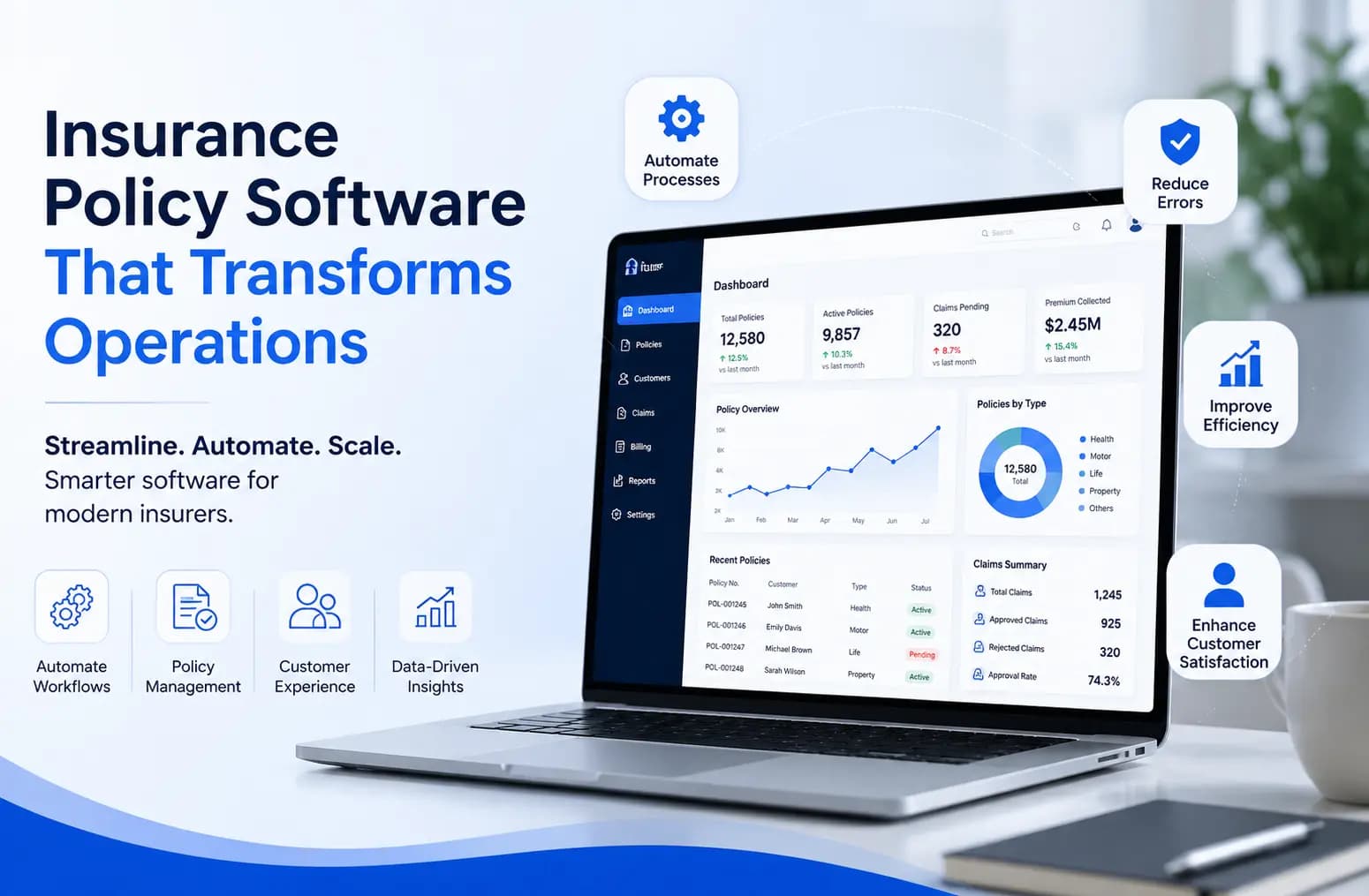
Insurance policy software automates the full journey from quote to issued policy, replacing manual portal logins, paper forms, and multi-day turnarounds with a single digital flow that issues a policy in minutes. For banks, NBFCs, and fintechs, it means faster sales, fewer errors, and a lower operational cost per policy.
Why Insurance Operations Break Down Without the Right Software
Traditional insurance distribution is built on fragmented systems. A relationship manager logs into five carrier portals, re-enters customer data on each, chases documents over email, and waits two to seven days for a policy PDF. At every step, there is a chance for error, drop-off, or delay.
The result: journey completion rates as low as 50%, high proposal error rates, and operations teams spending more time on manual reconciliation than on growing the book.
Insurance policy software solves this by bringing every stage of the lifecycle into one connected platform: quoting, proposal, KYC, payment, issuance, renewal, and claims.
What Insurance Policy Software Actually Does
1. Multi-Carrier Quoting in Real Time
Instead of toggling between portals, a single query surfaces premiums from 35 or more insurers side by side. Comparison goes beyond price to show waiting periods, room-rent caps, and network size, so the right product gets recommended, not just the cheapest one.
2. Smart Proposal Forms
A single adaptive form replaces the stack of insurer-specific applications. Fields specific to the chosen insurer appear only when that insurer is selected, cutting proposal errors by up to 45% compared to re-keying data across portals.
3. Automated KYC
PAN-based CKYCpullsl pre-fills identity fields automatically. No document uploads for clean cases, no manual verification queues. The customer moves through in seconds, not hours.
4. Payment Inside the Flow
UPI, card, netbanking, and payment-link options are embedded directly into the journey. There is no handoff to a separate payment page that risks drop-off.
5. Instant Policy Issuance and Delivery
Once payment clears, the policy PDF is generated and delivered via WhatsApp and email. The full journey, from quote to issued policy, takes around six minutes on platforms like DeployIT's Policy Issuance Software.
6. Renewal Automation
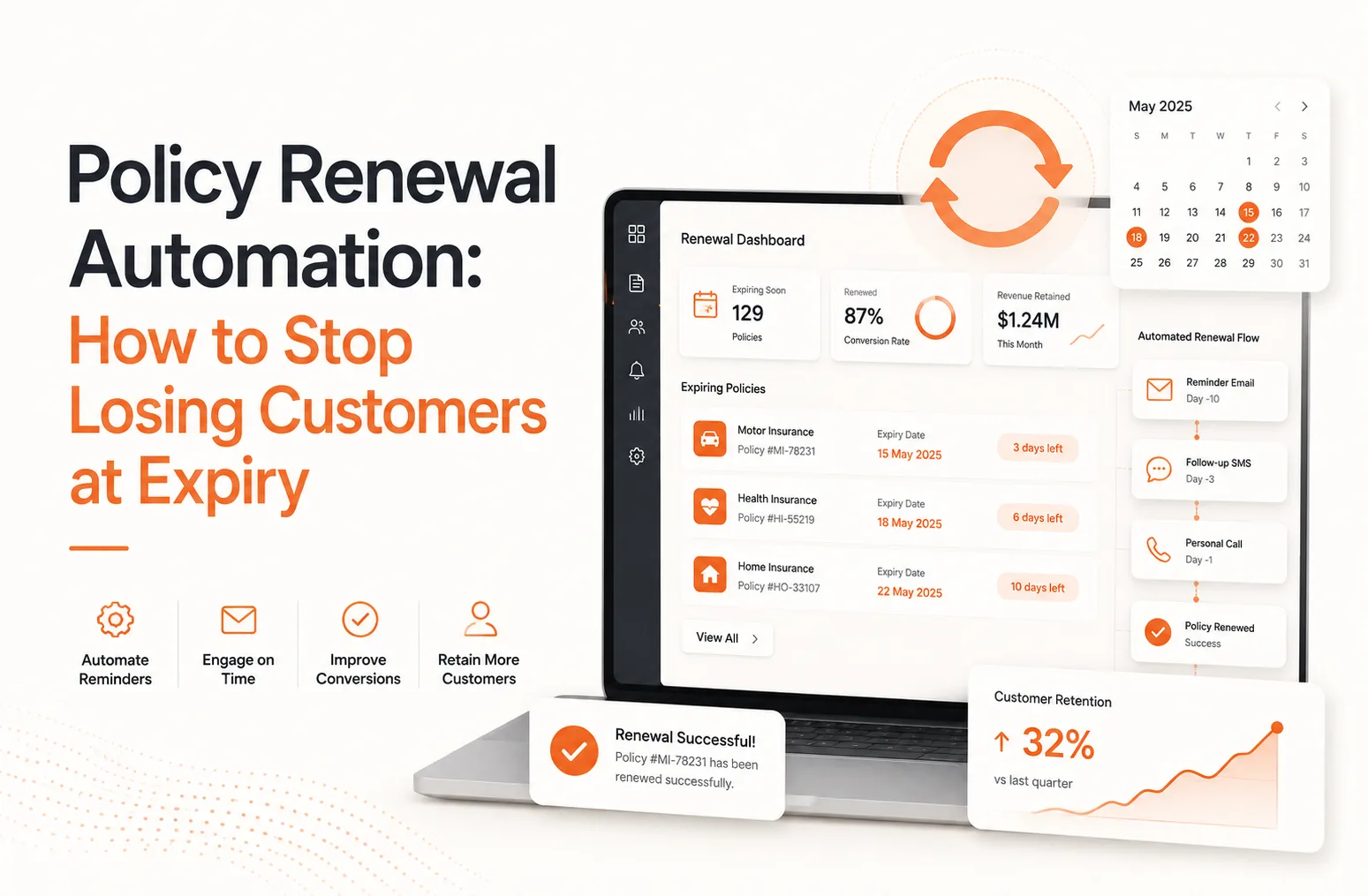
The renewal journey is scheduled automatically at the moment of issuance, not 30 days before expiry. Persistency models flag at-risk policies weeks ahead and trigger nudges across WhatsApp, SMS, and RM queues.
The Operational Impact: Before vs. After
Metric | Traditional Workflow | With Policy Software |
|---|---|---|
Portal logins per policy | 5 | 0 |
Time to issue | 2 to 7 days | ~6 minutes |
Forms per insurer | 3 | 1 |
Proposal error rate | ~18% | Up to 45% fewer errors |
Journey completion | ~50% | ~82% |
Who Benefits Most
Banks and NBFCs distributing insurance alongside loan products need issuance that fits inside an existing customer journey. Embedding insurance at loan disbursal, for example, requires a flow that completes in the same session, not the next business day.
Brokers and POSP networks need a single platform where agents can quote any insurer without multiple logins or separate training on different portals.
Fintechs building insurance into their apps need REST APIs and embeddable components that slot into their own UI without compromising the user experience.
DeployIT is built specifically for these regulated distribution contexts in India, with IRDAI-aligned workflows, 35+ insurer integrations, and 200+ products ready to deploy.
Ready to Transform Your Insurance Operations?
If your team is still managing policies across multiple portals, the operational cost is real: in staff time, in customer drop-off, and in errors that reach underwriting.
Explore DeployIT's Policy Issuance Platform to see the full six-minute journey, or get in touch with the team to walk through your specific distribution use case.
- Insurance policy software compresses a 2 to 7-day issuance process into minutes by automating proposal, KYC, payment, and policy generation in one connected flow.
- Multi-insurer quoting from a single interface eliminates multiple portal logins and reduces proposal errors by up to 45%.
- Automated KYC via CKYC pull removes the biggest manual bottleneck for clean cases, with no document uploads required.
- Renewal automation starts at the moment of issuance, protecting persistency and lifetime value before a policy ever lapses.
- Platforms built for Indian regulated distribution handle IRDAI compliance and carrier integrations out of the box, so banks, NBFCs, and fintechs go live without building from scratch.
- Straight-through processing rates of up to 85% on retail health cases mean underwriters only review cases that genuinely need human judgment.
Have any questions?
What is insurance policy software?
Insurance policy software is a platform that automates the full lifecycle of an insurance policy: quote comparison, proposal, KYC verification, payment, issuance, and renewal management. It replaces manual carrier portal workflows with a single digital flow.
How long does it take to issue a policy using modern software?
On a platform like DeployIT, a family health floater covering quote, KYC, and payment completes in around six minutes, compared to two to seven days using traditional portal-based workflows.
Can insurance policy software integrate with existing banking or fintech apps?
Yes. Enterprise-grade platforms expose REST APIs and embeddable widgets so the entire insurance journey runs inside your own app or portal under your branding. Teams typically ship a working integration within the first week.
Is the platform IRDAI compliant?
Purpose-built platforms like DeployIT are engineered around IRDAI guidelines, covering distribution model requirements, digital KYC infrastructure, DPDP Act 2023 data architecture, and e-Insurance Account readiness.
What happens if a case needs underwriting review?
Cases that do not clear straight-through processing are automatically routed to underwriting with full customer context. The customer does not need to restart the journey. Up to 85% of retail health cases pass straight through.
How does the software handle renewals?
The renewal journey is auto-scheduled at the point of issuance, typically on Day 305 of the policy year. AI-driven lapsation models identify at-risk policies and trigger multi-channel nudges before expiry, lifting persistency by up to 12 points.



Ready to distribute health insurance at scale?
Talk to the Deployit team for a 30-minute walkthrough.